
Air Entrained Concrete: What It Is, When to Use It, and When Not To
Last Updated January 2026
If you’ve ever ordered concrete and been asked whether you want it air entrained, you’re not alone in wondering what that actually means, and whether you really need it.
Air entrained concrete isn’t better or worse than regular concrete. It’s simply designed for specific conditions. In this post, we’ll explain what air entrained concrete is, why it exists, when it makes sense to use it, and when you should avoid it.
If you're planning a pour, we deliver ready-mix concrete throughout Lake Norman and the greater Charlotte region and we can help you choose the right mix for your project.
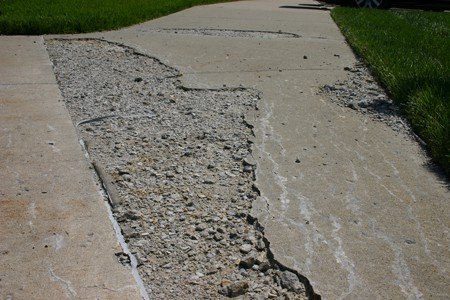
Concrete damaged from freezing
What Is Air Entrained Concrete?
Air entrained concrete is a concrete mix that has tiny, evenly distributed air bubbles intentionally mixed into it using an admixture.
These air bubbles are microscopic, you won’t see them, but they serve an important purpose: they give water inside the concrete room to expand when it freezes.
In plain terms, air entrainment helps concrete handle freeze-thaw cycles without cracking or scaling.
Most air entrained concrete contains roughly 4–7% air, depending on the application, mix design, and weather conditions.

Microscopic air pockets in air entrained concrete
Why Air Entrainment Matters
Concrete absorbs moisture. When that moisture freezes, it expands. Without somewhere for that expansion to go, pressure builds inside the concrete and can cause:
Surface scaling
Flaking
Hairline cracks that grow over time
The tiny air bubbles created by air entrainment act like pressure relief pockets, allowing freezing water to expand without damaging the concrete itself.
Benefits of Air Entrained Concrete
Air entrained concrete is commonly used because it:
Improves freeze-thaw durability
Reduces surface scaling
Improves workability
Reduces bleeding and segregation
For concrete exposed to weather, these benefits can significantly extend the life and appearance of the slab.
When You Should Use Air Entrained Concrete
Air entrained concrete is typically recommended for exterior applications, including:
Driveways
Sidewalks
Patios
Steps
Exterior slabs exposed to rain and freezing temperatures
In North Carolina, freeze-thaw cycles aren’t extreme, but they do happen, especially during winter cold snaps. Exterior concrete that stays wet and experiences freezing temperatures can benefit from air entrainment.
If it’s outdoors and exposed to the elements, air entrained concrete is usually the right choice.
Planning a driveway, patio, or exterior slab in the Lake Norman area? We can help you choose the right mix and handle delivery, or connect you with a vetted local concrete contractor at no charge. Tell us about your project and we'll connect you with someone we trust. Click the button below for more information.
When You Should Not Use Air Entrained Concrete
Air entrained concrete is not ideal for every situation, especially when freeze-thaw protection isn’t needed.
You may want to avoid air entrained concrete for:
Interior slabs
Garage floors
Basement floors
Footers
Steel-troweled or polished finishes
Applications where a very dense surface finish is required
The entrained air can make it harder to achieve a tight, glossy finish, which is why non-air concrete is typically preferred for interior flatwork and “slick finishes”.
Does Air Entrained Concrete Have Lower Strength?
In practice, no, not when it’s ordered correctly.
When air entrainment is added to a concrete mix, the batch plant adjusts the mix design so the concrete still meets the specified compressive strength, such as 3,000 PSI, 3,500 PSI, or 4,000 PSI at 28 days.
Air entrained concrete is not “weaker” concrete. It is designed differently to account for the added air while still achieving the required strength.
Where air entrainment does make a difference is in finishability, particularly for steel-troweled or polished surfaces. This is why non-air mixes are typically preferred for interior slabs, even though both mixes can meet the same strength specification.
This is also why it’s important to communicate how the concrete will be used when ordering so the batch plant can design the mix appropriately.
Air Entrained vs Non-Air Concrete (Quick Comparison)
Air Entrained Concrete
Designed for freeze-thaw durability
Commonly used outdoors
Harder to steel-trowel or polish
Non-Air Concrete
Preferred for footers and interior slabs
Better for smooth, dense finishes
Typically used where freeze-thaw isn’t a concern
Neither mix is “better” overall. They’re just built for different applications.
Frequently Asked Questions
What does air entrained concrete mean?
It means the concrete contains tiny, intentionally added air bubbles that help protect it from freeze-thaw damage.
Do I need air entrained concrete in North Carolina?
For exterior slabs like driveways, sidewalks, and patios, usually yes. For footers and interior slabs, usually no.
Can air entrained concrete be steel troweled?
It can be difficult and is generally not recommended. Non-air concrete is a better choice for steel-troweled finishes.
Is air entrained concrete weaker?
No. When properly designed by the batch plant, air entrained concrete still meets the specified compressive strength. The main difference is finishability, not strength.
Ready to order a delivery?
We deliver ready-mix concrete throughout Mooresville, Statesville, Troutman, Denver, Huntersville, Cornelius, Davidson, Concord, and the greater Charlotte area. Monday–Friday, 7am–5pm.
Call or text us at 980-281-3131. We're happy to help you plan your pour.
Need a concrete contractor for the work?
We refer homeowners to vetted local contractors across the Lake Norman region at no charge. Tell us about your project and we'll connect you with someone we trust. FIND A CONCRETE CONTRACTOR